Scan the nutrition label on most products and you'll often see zinc quietly overlooked — yet it may be one of the most important minerals you're not getting enough of. Some call it the "Godfather of all minerals," and for good reason. Because today's soils are so depleted, nearly all of us run a little low. Let's learn why this humble mineral deserves a place in your daily routine.
1. It's the Foundation of Your Immune System
Zinc is essential to immune function, especially the thymus gland. Think of it this way: your white blood cells use zinc like bullets against viruses, bacteria, and pathogens. With enough zinc, your immune cells can finish the job completely, leaving no lingering threat behind.
2. It Supports Fertility & Pregnancy
Zinc plays a vital role in both male and female fertility, supporting the rapid cell growth a developing baby needs. It is genuinely foundational to healthy reproduction — a small mineral with an enormous responsibility.
3. It Helps Detox & Protect the Liver
Zinc supports lymphatic movement and assists the liver across many of its daily processes. Since the liver works tirelessly to keep us well, giving it steady mineral support is a real act of care.
4. It Helps You Absorb Iron
Here's a surprising connection: the body can't hold onto iron well without enough zinc and B12. Many cases of low iron are really a story of depleted zinc and B12 — reserves quietly burned through while fighting off pathogens.
5. Your Body Needs It Every Single Day
This is the key lesson: the body stores very little zinc, and it doesn't recycle what it uses. Combined with mineral-poor modern soils, that means we need to replenish zinc daily — just like we reach for fresh fruits and vegetables.
Whole-Food Sources of Zinc
You can find zinc in many lovely whole foods:
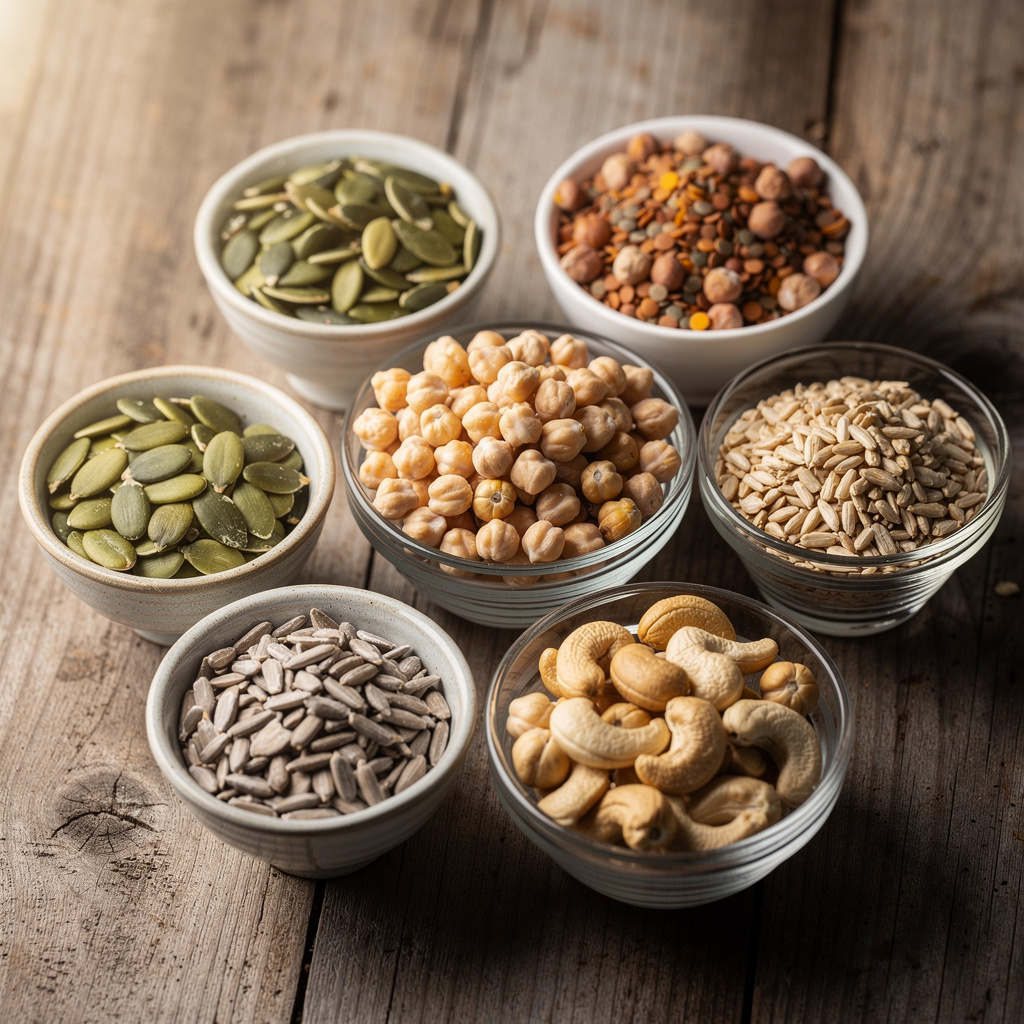
- Pumpkin, sesame, sunflower, and watermelon seeds
- Flax seeds and wheat germ oil
- Peas
- Cashews and almonds
- Gluten-free oatmeal
How to Get It In Gently
- Take it with food. Zinc on an empty stomach can cause mild nausea.
- Start low and slow, increasing gradually as your body adjusts.
- Pair with juice or water. A little natural sugar helps your cells absorb it.
- For little ones, zinc can be added to food under the guidance of a practitioner.
Signs you may be running low include white spots on the nails, cracked heels, frequent illness, and thinning hair. The reassuring news is that zinc deficiency is far more common — and more concerning — than getting too much. A small, steady daily habit is all it takes.
This post is for educational purposes only and is not intended as medical advice. Always consult a trusted health practitioner before beginning any new supplement, especially for children or during pregnancy.
Build this into your week
Use AIM to turn whole-food ideas into family meals, snacks, and a ready-to-shop plan.
Build my meal plan