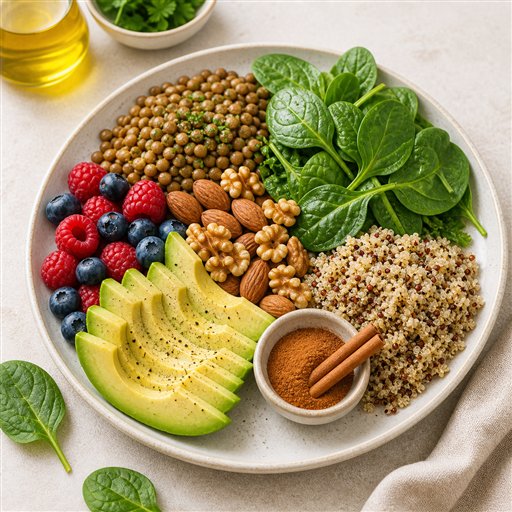
Let's give some long-overdue attention to the quiet heroes of the body: minerals. Every system you have — your heart, your nerves, your muscles, your immune defenses — depends on them to function. In fact, the body simply cannot heal or repair itself without minerals. Understanding them is one of the most empowering lessons in all of nutrition.
Why Minerals Matter So Much
Here's a foundational truth: minerals come first. As the saying goes, minerals build amino acids, and amino acids build protein. They're that fundamental.
There's also a key partner in this story — your liver. A sluggish or fatty liver can't store vitamins and minerals well, so caring for your liver is part of caring for your mineral health.
The 6 Major Minerals (and Where to Find Them)
Calcium — builds strong bones and teeth and supports nerve and muscle function. Low levels can show up as muscle cramps, numbness, low mood, or forgetfulness. Whole-food sources: almonds, kale, broccoli, leafy greens, figs, dates, oranges, berries.
Potassium — governs the heart's electrical rhythm and supports protein and carbohydrate use. Sources: cantaloupe, potatoes, tomatoes, lima beans, bananas.
Sodium — stimulates nerve and muscle function, maintains hydration, and supports the brain and adrenals. (We're talking mineral-rich food sodium, not the processed kind.) Sources: celery juice, dates, apples, beets, spinach, artichokes.
Magnesium — supports more than 300 biochemical reactions, builds bones, boosts immunity, and helps balance the thyroid. It's deeply calming, too. Sources: beans, nuts, leafy greens — plus relaxing Epsom salt baths.
Phosphorus — builds teeth and bones and helps maintain the body's acid-alkaline balance. It lives in every cell. Sources: broccoli, garlic, sunflower seeds.
Chloride — balances body fluids and helps produce the stomach acid you need to digest food. Sources: kelp, olives, tomatoes, lettuce, celery.
A Note on Calcium and Dairy
Many people assume dairy is the best path to strong bones, but the research tells a more nuanced story — dairy hasn't been shown to strengthen bones, and some studies link it to higher health risks. The encouraging news is that plant-based calcium sources (like almonds, leafy greens, and figs) are wonderful, gentle alternatives.
How to Get Minerals In — and Absorb Them
- Favor whole foods first. Food sources are the safest, most balanced way to get your minerals.
- Be careful with isolated supplements. Too much of one major mineral — or synthetic versions — can actually cause a deficiency in another. Balance matters.
- Support your liver, so your body can store and use what you give it.
- Eat a colorful variety. Different foods carry different minerals, so a rainbow plate is a mineral-rich plate.
A lovely way to put this into practice is a nourishing winter bowl of lentils, cabbage, carrots, celery, and spinach — simple, warming, and brimming with the minerals your body is quietly longing for.
The Heart of the Lesson
Minerals may not get the spotlight that vitamins do, but they are the very foundation of vibrant health. Feed your body a colorful variety of whole foods, care for your liver, and let these unsung champions do their beautiful work.
This post is for educational purposes only and is not intended as medical advice. Always consult a trusted health practitioner about your individual needs.
Build this into your week
Use AIM to turn whole-food ideas into family meals, snacks, and a ready-to-shop plan.
Build my meal plan